
Whatever happened to the Old Testament sacrificial system? For centuries God’s people brought animals and shed blood for their own sins and the sins of the community. Has all of that stopped? Or do some sacrifices carry on into the New Covenant life we have with Jesus?
A feast, a family and a sacrifice
Thanksgiving is coming in the United States, and with it what Mark Nicholson, our executive director, calls the three F’s: family, feasting and football. Mark raises his own turkeys on his farm, and this year they sold out so fast that his family may end up with a grocery-store bird.
But the season sent us back to a phrase that shows up in the Psalms: the sacrifice of thanksgiving. The New Testament speaks of a sacrifice of praise as well. That raises a fair question about the whole sacrificial system. Why did part of it pass away, and why is part of it still with us?
It is a question believers ask often. A brother in John Ensor’s church asked him the same thing just last week. How do we read the Old Testament when many of its laws and instructions clearly do not carry over into the New Covenant, while its moral laws are universal and lasting because they flow from the character of God? And what about all those sacrifices for sin? Why don’t they continue?
The sacrifices for sin are not ended. They are completed.
The book of Hebrews gives the answer. Jesus is the new high priest of the New Covenant, and he is also the once-for-all sacrifice. The blood of heifers and sheep no longer has to flow for every sin. That blood was always imperfect, and it always pointed ahead to the day when perfect blood would be shed. It was the blood of Jesus.
The whole sacrificial system was a reminder, year after year, decade after decade, generation after generation, that we need the forgiveness of sins and that the blood of goats will not provide it (Hebrews 10:3–4). Those sacrifices pointed to our need, not to the solution. Christ is the Lamb of God. So the sacrifices for sin did not simply stop. They were completed. Jesus arrived and was everything the system pointed to and taught us to wait for.
Mark has carried a picture of this with him since college. He and Dana, then his fiancée, worked through a Bible study on Hebrews that they had picked up off the shelf of a Christian bookstore. Under that writer’s guidance Mark pictured Jesus putting on the robe, the ephod and all the bells of the great high priest, coming in to offer the once-a-year atoning sacrifice for the people. Then he steps up onto the altar himself. He is the final lamb ever offered. It is a metaphor, of course, not history, but it is a beautiful one.
Hebrews is hard going for many of us because we do not know the Old Testament well and it is not part of our culture. But its claim is staggering. Jesus is now our high priest. We are the living stones of the temple (1 Peter 2:5), so we do not need a building. And we do not need sacrifices for sin. If we tried to offer them, we would be saying that what Christ suffered was not enough to please God and that we must add to it. To add to the cross is to subtract from it.
That includes punishing ourselves for our failures. The only thing we can do is receive what Christ has done for us on the cross and rejoice in it.
The sacrifices that continue
There are still sacrifices in the New Testament. They are just not sacrifices for sin. The same chapter of Hebrews that tells us the old system has given way to something far greater names two of them.
The first is praise. “Through him then let us continually offer up a sacrifice of praise to God, that is, the fruit of lips that acknowledge his name” (Hebrews 13:15). We rarely think of praise as a sacrifice, but the word fits. In the Old Testament a sacrifice was something intentional and planned: I am going to bring this and lay it before the Lord. Worship, prayer and singing are things we bring to the Father in the same way.
The second follows in the next verse: “Do not neglect to do good and to share what you have, for such sacrifices are pleasing to God” (Hebrews 13:16). It is a kind acknowledgment from the Lord that what we give to others in need really is something we give up. We could have held on to it. What we give to our local church, to the cause of missions, to a crisis, or to a needy person we meet along the way is a sacrifice, and God is well pleased with it.
It often feels like one, too. We are tempted to clutch what we have because keeping it would feel a little better. Many people feel the pinch of rising gas and grocery prices. They have three or four children to feed and college to plan for. Most people in the world are striving to make ends meet, so whatever we give up to help others truly costs something. Yet there is a quiet joy and satisfaction in that kind of giving. It is costly, and it carries its own reward.
Praise that costs something
There is an irony in a sacrifice of rejoicing. What makes praise a sacrifice, if it costs us nothing? Very often it does cost something. Thanksgiving is often offered from a sorrowful heart, by people who live in the flesh, in a fallen world, not yet in perfect communion with God.
Many who follow PassionLife know that two years ago Mark and Dana lost their 21-year-old son. It was tragic. Through it Mark has learned something of what it means to sacrifice praise and thanksgiving. Sometimes it runs against what his emotions feel: to remember what God has done that is good, and to return to him the thanks and praise due his name, even when life in this flesh is painful.
One of the sweetest discoveries of the Christian life is that we can rejoice and give thanks to God while we weep and lament, depending on what we are looking at in that moment. Paul wrote “Rejoice in the Lord always; again I will say, rejoice” (Philippians 4:4) from prison, in chains.
A thanksgiving meal in the Old Testament
So what are we thankful for this year, and what sacrifice of praise can we bring? For many people it starts with what God has done in their own lives and families. That is why so many call Thanksgiving their favorite holiday. It is family time.
The Old Testament has something very like it. Leviticus 7 describes the peace offering, and that passage is the first place the Bible speaks of an offering made “for a thanksgiving” (Leviticus 7:12). The Psalms take up the phrase: “Offer to God a sacrifice of thanksgiving” (Psalm 50:14) and “I will offer to you the sacrifice of thanksgiving and call on the name of the Lord” (Psalm 116:17).
The peace offering joined an animal sacrifice with an offering of bread, and then it was eaten together, with thankful hearts, among friends and a wider community. In many ways it looks like the Thanksgiving meal Americans share.
Other countries keep a day of thanksgiving too. Still, one sign of God’s grace on the United States is that the nation once felt a formal obligation to give thanks to God and set aside a day to do it. That does not make everyone in the country a Christian. It is simply one place where the Christian faith has shaped a culture toward gratitude, and we are glad for it.
Like reading the book of Acts
We get to feast on sacrifices of praise almost every week. The PassionLife staff meets every Monday by Zoom because we are spread out, and that means our meetings are not limited to the United States. Partners and friends join us from India, Vietnam, Kenya and Colombia. We go around and ask what God has been doing this week: who has been teaching the Four Questions, sharing with churches, and investing in communities and in women at risk for abortion.
Last week’s meeting was a feast. Stories came in from Botswana, Cuba and other hard places. India reported babies saved and pastors repenting for not leading well on the sensitive subject of abortion. A new U.S. staff member joined us for the first time and got to see what these meetings are usually like. Don Nelson, a former PassionLife board member, used to say that hearing these reports was like reading the book of Acts and watching it come alive. The stories seem almost supernatural, and in many ways they are.
You will not hear them on the news. The evening news is mostly bad news, with one uplifting story at the end. Our updates run the other way: mostly encouraging stories, with an occasional hard one where things did not go well. Those hard places are why we need prayer, intercession, sacrifice and giving. They also make the breakthroughs all the sweeter.
Tears of repentance
One photo shows a woman weeping deeply in a public meeting while others pray around her. We see scenes like this hundreds of times around the world. Why call it a picture of thanksgiving?
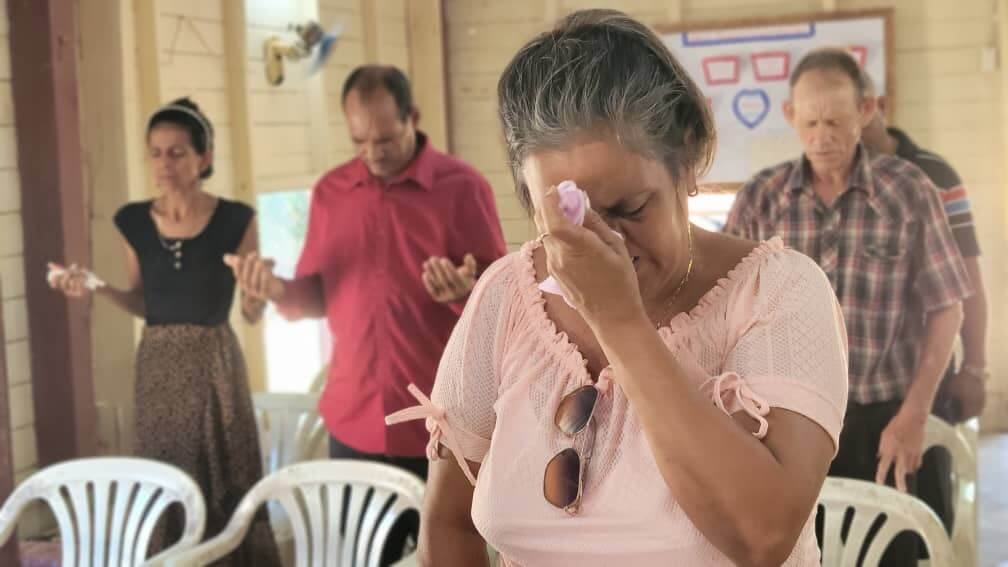
Paul gives the answer: “I rejoice, not because you were grieved, but because you were grieved into repenting. For you felt a godly grief, so that you suffered no loss through us. For godly grief produces a repentance that leads to salvation without regret, whereas worldly grief produces death” (2 Corinthians 7:9–10).
That is what is happening to this woman. Men and women, pastors among them, see the value of human life according to the Bible and the humanity of the child according to science and fetal development. They face the reality of abortion and their call to rescue the weak and defend the innocent, and they break down and weep in repentance. Secrets come out, people come forward, and they experience the cleansing power of the gospel. We do not rejoice in the grief. We rejoice because those tears lead to repentance, to salvation and to freedom.
A rescued mother in Cuba
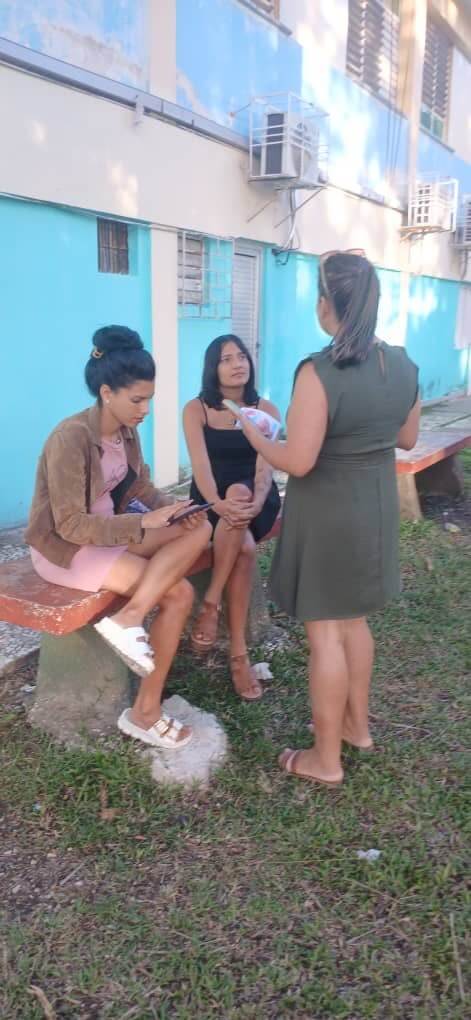
A story from Cuba shows God’s people answering the call to do good and share what they have. The believers there have no building to meet in, so they meet people on a bench on the street. They met a woman there, befriended her, heard her story and promised to help her.
The next photo shows a pastor holding her newborn baby, saved from abortion, with the mother standing beside him. She is now part of God’s people in a local church.
In the next, she is being baptized, because she met these Christians and heard the gospel.
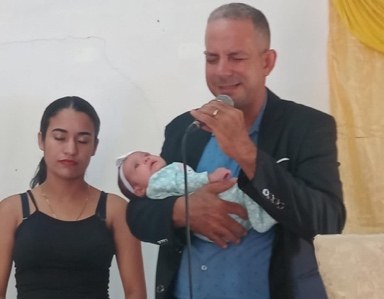
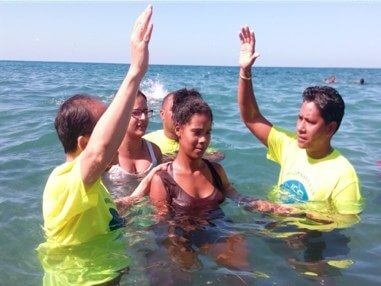
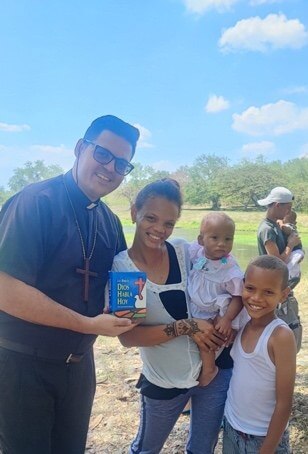
Things like this happen every day around the world through those who teach the gospel of life, and they are a source of unending joy and thanksgiving.
“PassionLife babies” in Pakistan
PassionLife made one trip to Pakistan this year. The day we recorded this episode a report came in that the churches there are still teaching. Seven or eight months after the training, women are pregnant and babies are being born, and the believers have started calling them “PassionLife babies.” We did not ask them to. They say PassionLife taught them how to do this.
Those babies belong to everyone who gave and prayed to send our team. PassionLife is not two men in front of a camera. It is the people who watch, who pray and who support this work.
Circles of praise around the table
When you pray over your Thanksgiving meal this year, think of the praise as concentric circles. There is God’s grace in your own life. There is your family, gathered with all the loose ends that come with family, but still family. And there is the gospel of life going out around the world as the aroma of Christ (2 Corinthians 2:15), which you get to be part of.
“Do not neglect to do good and to share what you have, for such sacrifices are pleasing to God.” We want to encourage you to consider joining the monthly supporters of PassionLife. Your sacrifice will help save innocent babies and see people transformed by Jesus Christ in some of the hardest places in the world. You will hear the stories as they come back, and your thanksgiving can run all year long.
Partner with PassionLife and join in this great work of the gospel. We don’t think you will regret it. You will give thanks to God.
This article is adapted from the episode transcript.