
A spark carried in a suitcase
John Ensor and I usually sit down together for the PassionLife Podcast every week. This week John was in the field, representing PassionLife at a conference, so I pulled up a chair for a friend instead: Pastor Wali, who pastors a church in Nairobi, KENYA, and walks with PassionLife across Africa.
Some of you know that John is set to retire next month, and I will be stepping into the role of president. I have served as executive director for about ten years, and here is what I can tell you: I am more thankful than ever for partners like Wali. Year after year they train the Four Questions, sit with church leaders, and stand as pro-life leaders in their own countries in their own right.
Wali and I became friends in 2022, when John and I first came to Nairobi to teach. Since then we have traveled to LIBERIA, ZIMBABWE and, about six weeks ago, MOZAMBIQUE together. From Mozambique he went on to MALAWI and taught the Four Questions seven times, in Blantyre and in the capital, Lilongwe. Pastors there saw our fetal model for the first time, and it shook them.
Then Wali went somewhere we had been trying to reach for a long time. BOTSWANA. What he found there is a fire. Small at first. Then spreading. Let me tell you how it caught.
The Four Questions, in Wali’s words:
- What does God say about human life, including life in the womb?
- What does God say about the shedding of innocent blood, including abortion?
- How do we present the gospel of grace to those who are guilty of abortion, so they can be forgiven and set free?
- What does God expect us to do, and how have others done it, to rescue lives?
We teach them the same way everywhere we go. That is on purpose. We are making disciples, so the pastors we train can teach others exactly the same way.
The littlest missionary opens the door
Botswana has been a hard country for us to get into. When Wali landed last month, security marked his bag red and told him to open it.
Right on top lay the baby models.
If you are new to the podcast: PassionLife developed a small fetal model that shows, with medical accuracy, a child nine weeks after fertilization. We give them away by the thousands every year at our trainings, because they help people see the humanity of the unborn.
At that airport, almost ten officers gathered around. Some wanted to know whether it was a real baby. Some asked to hold one. For fifteen minutes Wali taught them what we do: the Four Questions, and how we are carrying the message of the sanctity of human life across Africa with this small tool. When he finished, they told him, “If that is what you are doing, you are doing a great job. Welcome to our country.”
We have always called that model the littlest missionary in the world. In Botswana he did his job before Wali ever left the airport. He unlocked the door and rolled out the red carpet. Powerful.
Two schools in Mochudi
Wali did not start in the capital. His first stop, on the 20th, was the town of Mochudi.
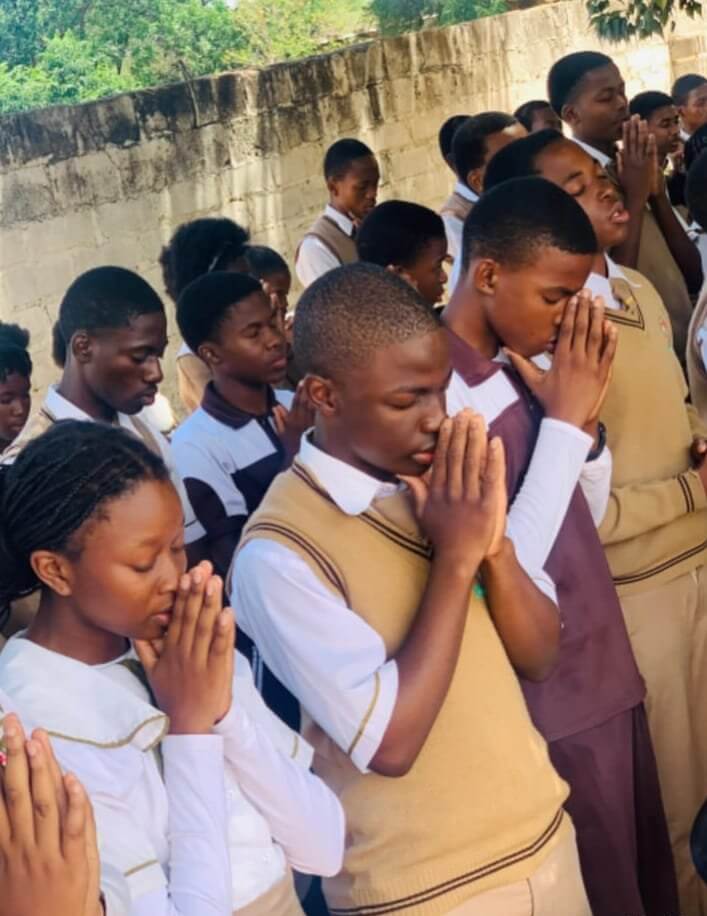
At the first school he taught 214 young people. If you could see the video, he said, you would see them jumping up to ask questions. They were hearing these things for the first time. It was exam season, so his time was short, but it was good time. They are already asking when he will come back.
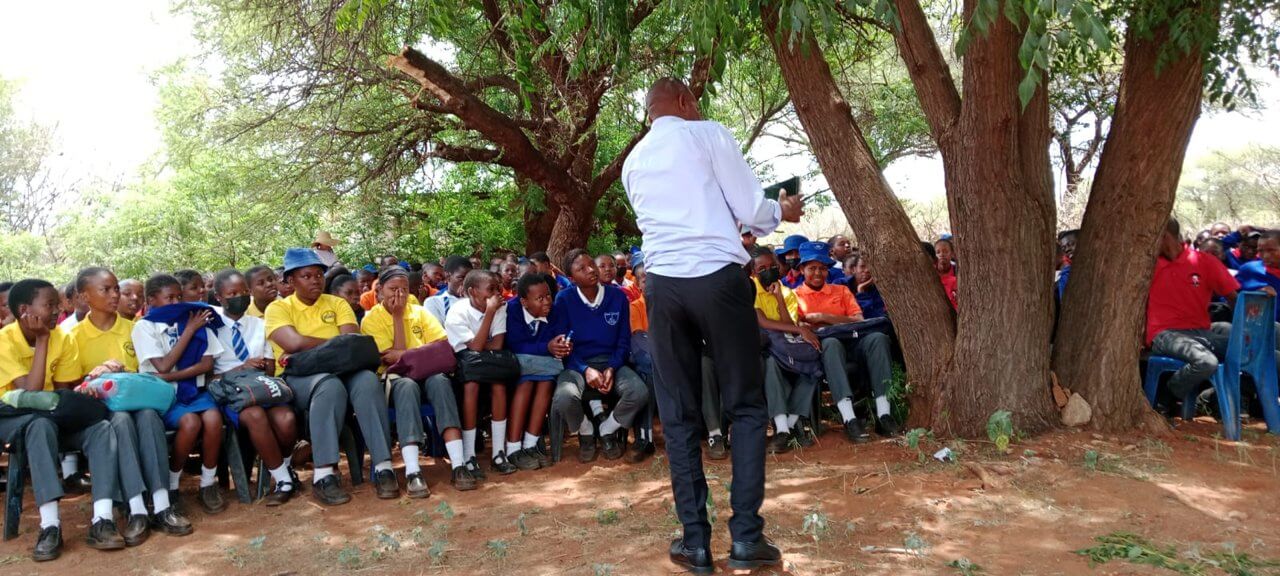
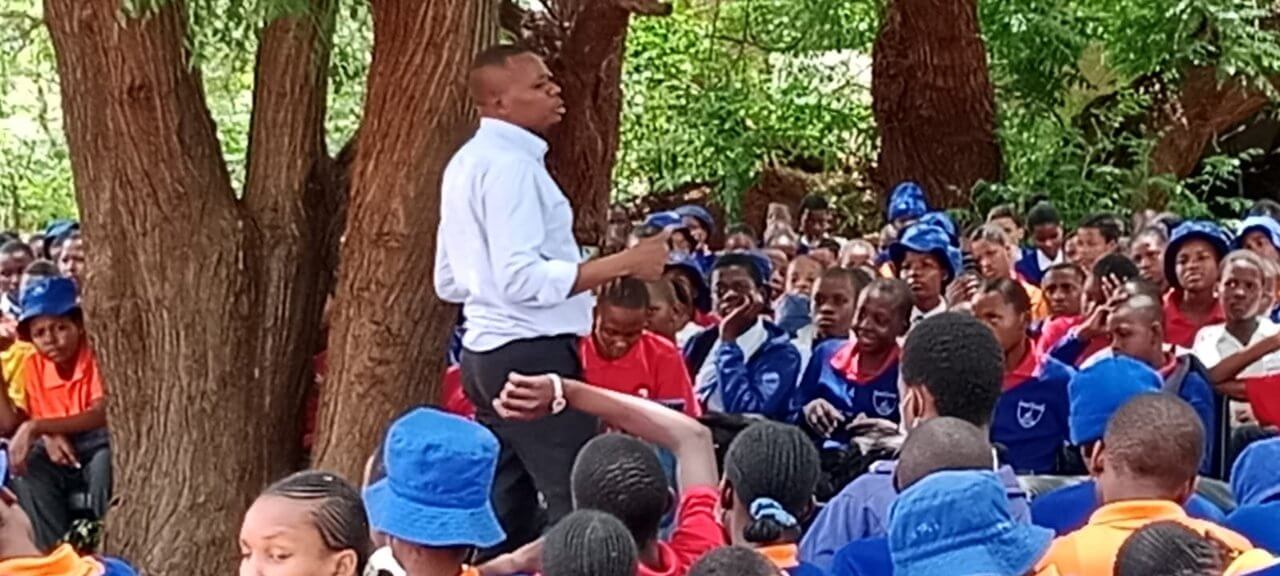
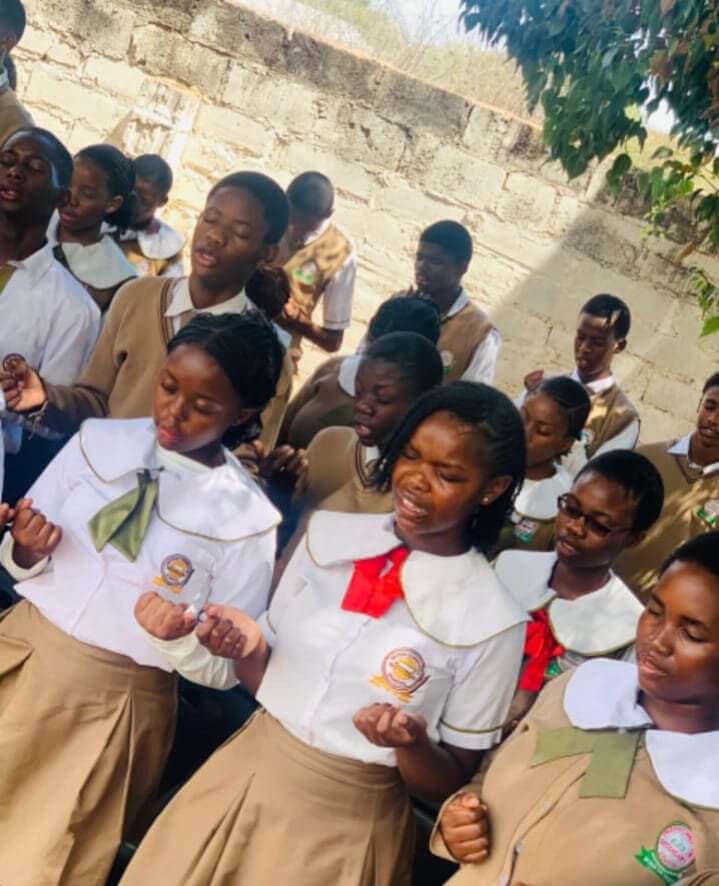
At the gate of the second school, Wali read the sign posted there: “No sex. No condom. No stigmatization.” Something stirred in his spirit. This, he thought, is a foundation to talk about life. Inside, 252 students sat before him. After he taught and gave them time to ask questions, 125 of them gave their lives to Jesus.
I said it on the program and I will say it again: that is a revival. The pictures he sent are amazing. Hundreds of kids lined up, listening, praying with him, receiving the word about human life and about the rescue of the soul that only Jesus gives.
Gaborone, and how the doors opened
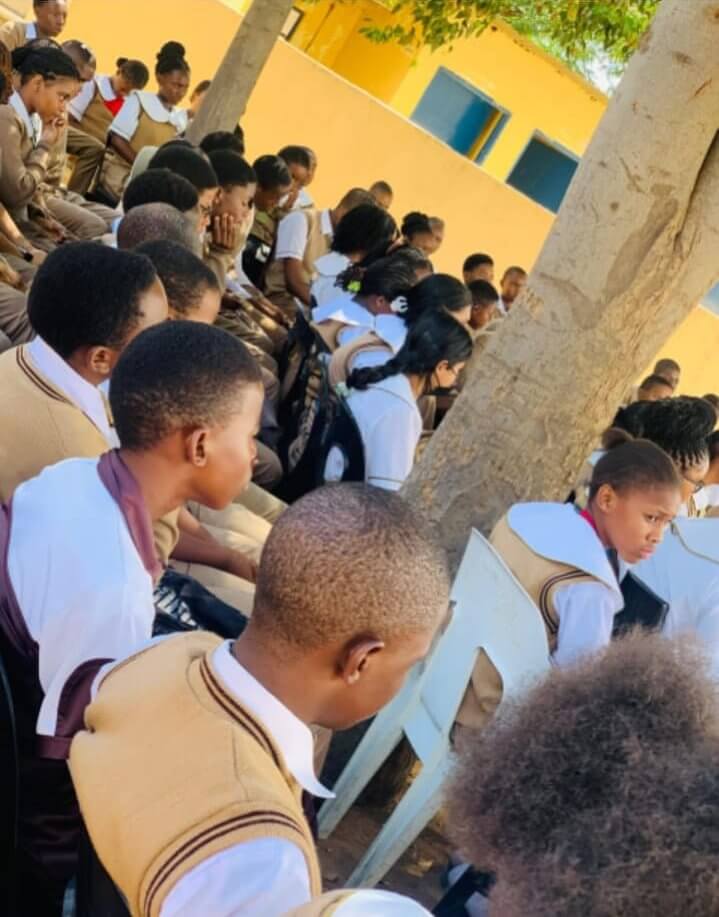
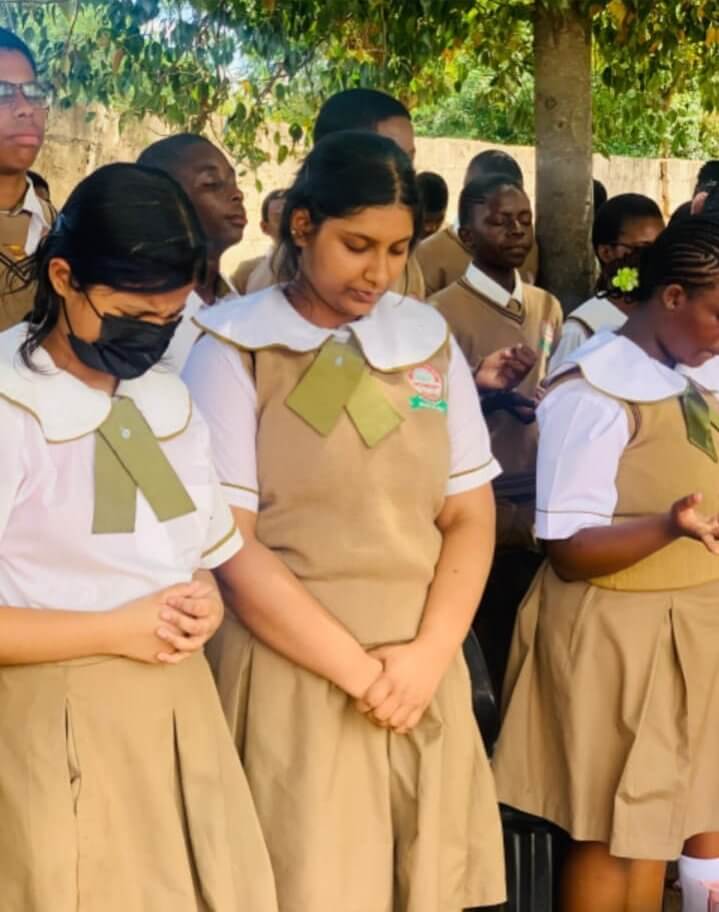
From Mochudi, Wali went back to the capital, Gaborone, and taught 58 students at an international school. It was a mix of nationalities, faiths and tribes, and you can see it in the pictures. They were keen to listen. When he finished, students surrendered their lives to Jesus and prayed with him, rededicating themselves to Christ.
I had to ask him the obvious question. Plenty of schools would be suspicious of this much religion in the classroom. How did he get in?
The Lord gave him a contact before he ever left. She runs her own schools and is respected as an educator, and she opened the door to the government schools. After that first meeting she told him, “Now I have known you. I have heard what you carry. I was a little bit afraid, but now I know you.” Then she told him that next time he should plan to stay more than a week, because there will be many more schools, and the doors will be open.
That is our story in so many places. People don’t know who we are at first, so they are cautious. Once they see that we handle the word of God with care, they say, “Come back. We’ll do more next time.”
Schools are not where we usually teach. But think about who sits in those rooms. Kids growing up in a secular society, curious about sex, need to hear about purity, biblical sexuality, abortion and its consequences. Wali pointed out that Botswana is in some ways ahead of Kenya, with a strong currency and a healthy economy. With that much money moving, it is easy for young people to drift, and many go partying on the weekends. To learn the sanctity of human life now is a great gift to them. We got right to the people where the problem lives.
Forty-eight pastors in one room
A woman who once served on the PassionLife board used to say that hearing our stories from around the world was like reading the book of Acts. I thought of her as Wali kept going.
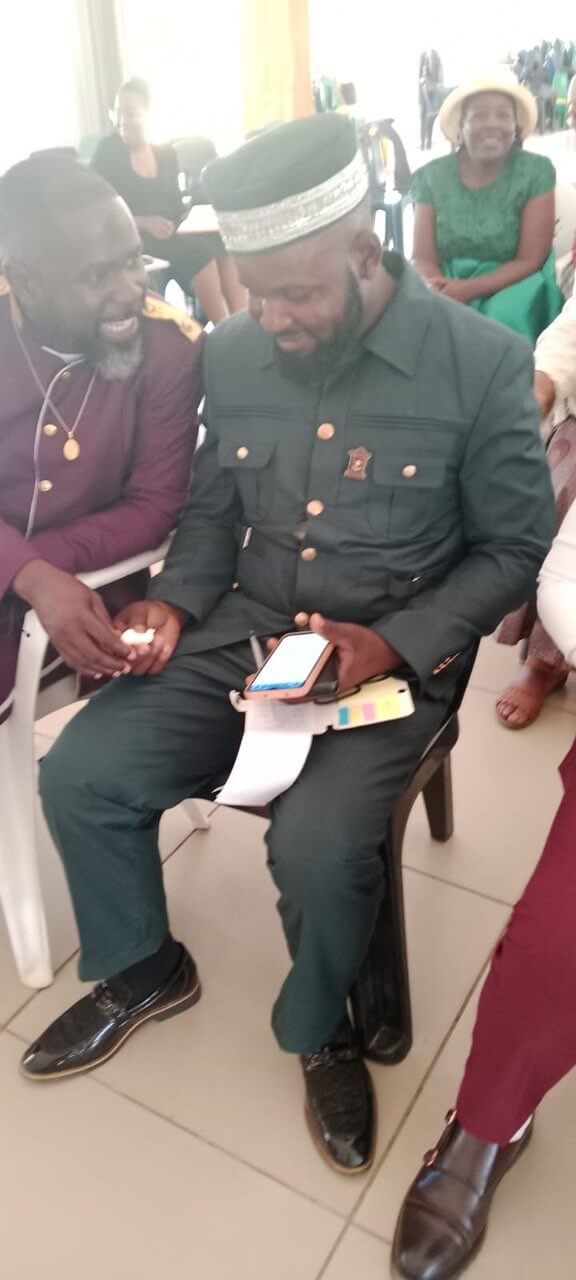
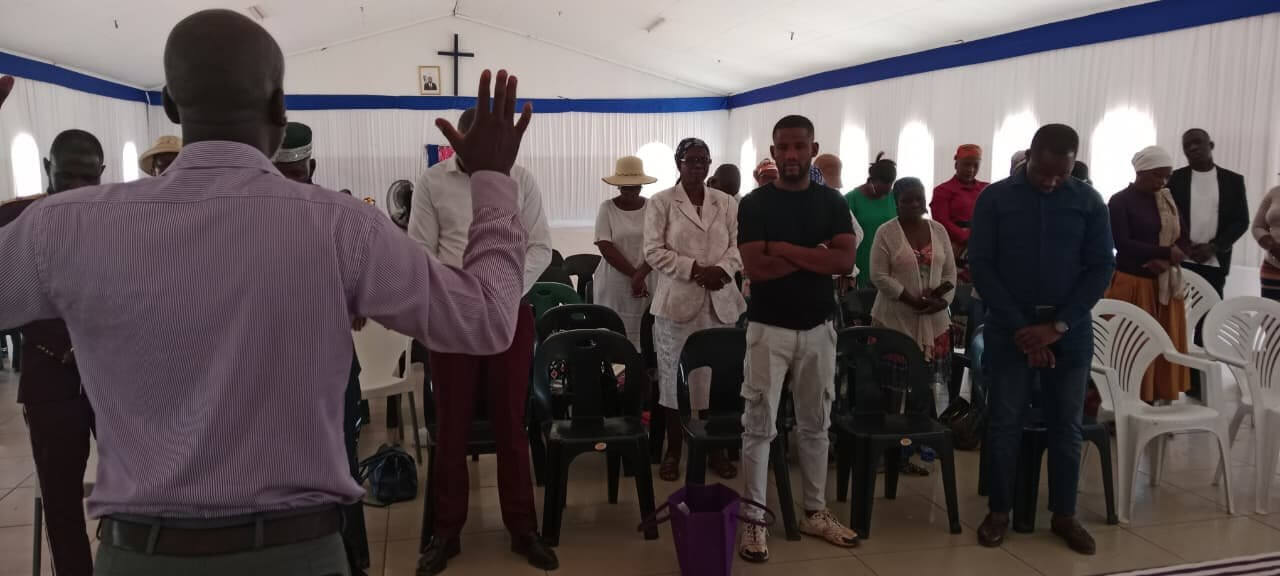
Botswana has many traditional churches, and some of them blend in practices far from the gospel. One of those churches invited Wali to teach, and it opened its doors to pastors from other churches too. Forty-eight pastors sat in that room. The bishop and founder of the church was there. So was the mayor, the political leader of the region. Wali felt the weight of it: this teaching was reaching the church, the government and the community at once.
When he came to the second question, on the shedding of innocent blood, the room went silent. People shifted in their seats. He learned later why. Some churches in Botswana still practice sacrifices, child sacrifice among them, and he had touched a nerve. He pushed on.
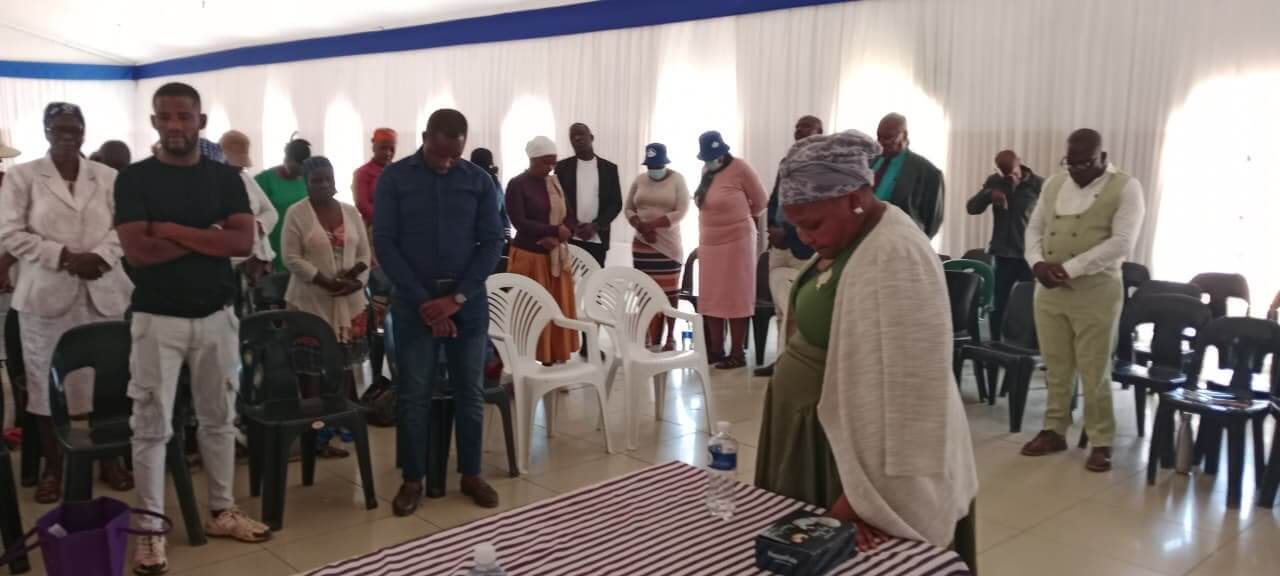
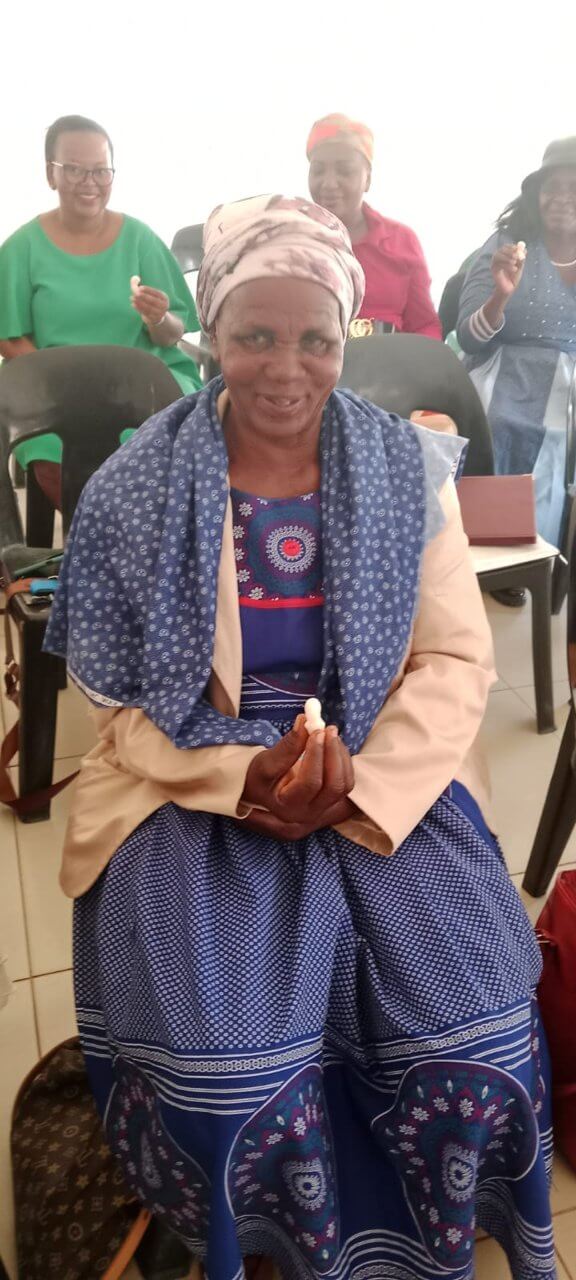
Then he opened the floor for questions, and the temperature rose. Wali called it the most interactive session he has ever led. He finally had to call time. As they left, several pastors told him, “Pastor, you’ve done a wrong thing.” Which one? “You planned such a wonderful training for us and told us it would take three hours. That is not fair. That is injustice.” They wanted more.
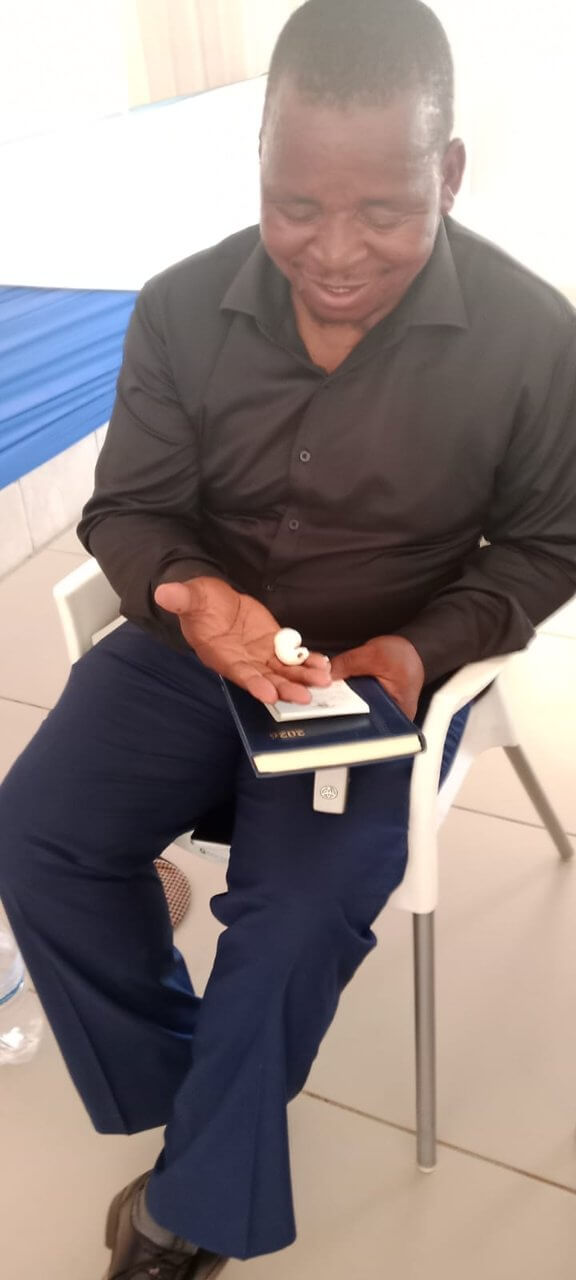
I’m not surprised. I could listen to Wali teach material I have heard him teach ten times. He is young, interactive, knowledgeable, entertaining and winsome. And he is one of a growing family. The Lord has given us partners in INDIA, VIETNAM, CUBA, COLOMBIA, and more and more in Africa, from Nairobi to ZAMBIA, all teaching the Four Questions together.
Forty-eight pastors is not an audience. It is a seed bed. The Four Questions are built simple enough to teach again, so those pastors were not just learning; they were learning how to train others. As soon as Wali finished, 26 of them came to him and said, “We want to take this material out. Tell us how.” He sat down with those 26 to show them how to compress the training, make the most of the time and stretch the resources. Many have already written to tell him what they are doing.
“I believe a great fire has sparked in Botswana,” Wali said, “and it is a fire that cannot be put out.” Amen. That’s what we’re looking for. Not just people taught, but a movement: pastors training pastors training pastors, leaders training leaders, people training people. We can only teach so many people in Botswana. We can train them to reach their own people with the gospel of life.
Fan the flame
I asked Wali what he learned about abortion while he was there. Abortion is illegal in Botswana. But Wali has seen a pattern across Africa: the nations where the law says abortion is illegal are often the very places where it is on the rise. He also saw how much sexual immorality is spreading; that is why a school had to post “No sex, no condom” at its gate. Where sexual immorality rises, he said, abortion rises at the same rate.
Laws alone don’t put out that fire. Changed hearts do.
So here is how Wali asked us to pray for Botswana:
- For the schools, colleges and universities to open their doors to this training, because when people gain knowledge, they are set free.
- For the churches, to welcome the training, grasp it, run with it and train others.
- For the fetal models to reach Africa. Our main office is in America, and getting the models across to Africa can be complicated. When we have them in good numbers, they are a great tool.
Would you pray with us? And would you consider fueling this fire? Every littlest missionary we send can open a door the way one did at that airport. You can send the Littlest Missionary at passionlife.org/littlest-missionary.
Pray for Botswana. Pray for the ministry of PassionLife. A spark is catching.
This article is adapted from the episode transcript.