
Medical missions has always worked, and it always will, for one simple reason: everyone needs a doctor, or knows someone who soon will. If it is true that there are 73 million abortions worldwide every year, then anyone who cares for the sick will meet a woman who has had an abortion or is thinking about one. That is why we want to talk about medical missions and abortion.
Back from Louisville
Mark Nicholson, our executive director, came home from Louisville, Kentucky, without his voice. He had spent the week at the Global Missions Health Conference, the largest gathering of missions-minded Christian medical professionals in the world, and talked with so many people in a loud exhibit hall that he came back with a cold.
About 2,000 people attended, and all of them were connected to medicine in some way. Mark met physicians, OB doctors, sonographers, family practitioners and nurses, and even people who work in medical equipment and sales. What they shared was a desire to use medicine to proclaim the glory of the Great Physician in another culture.
It is a sign of maturity when believers begin to think about the worldwide reach of the gospel. A working knowledge of medical missions goes further still. Its history is one of the most underreported and most exciting adventures in the story of world missions, and it is still alive and well today. Again and again, medical missions has been the key that unlocked countries that were hard for missionaries to enter.
It starts with Jesus
To tell the story of medical missions, you have to start with Jesus himself. In a sense he was the first medical missionary: he healed everywhere he went.
In Matthew 11, John the Baptist is in prison when he hears about the deeds Jesus is doing. He sends his disciples to ask, “Are you the one who is to come, or shall we look for another?” Even John, who understood who Jesus was, had expectations about what Jesus should be doing, and Jesus had his own agenda. So Jesus answers:
“Go and tell John what you hear and see: the blind receive their sight and the lame walk, lepers are cleansed and the deaf hear, and the dead are raised up, and the poor have good news preached to them.” (Matthew 11:4–5, ESV)
These were life-changing healings. If you are blind and suddenly you can see, or lame and suddenly you can leap for joy, everything changes. They were the signs that the kingdom of God was breaking into time and space in power, and they are the beginning of medical missions.
The plague and the first hospitals
A wonderful one-volume history of how the gospel spread from Jerusalem to the farthest places in the world, From Jerusalem to Irian Jaya, tells what happened when a series of plagues struck ancient Alexandria. Everyone who could fled to the countryside, where people were not stacked so close together. The early Christians stayed to care for the sick and bury the dead.
That left its mark. It gave Christians a reputation as people of extraordinary love, care and compassion. The word hospital comes from hospitality; caring for the sick is a long Christian tradition, and the hospital itself is a fruit of Christianity.
The door into closed countries
When modern missions reached into Africa, China, Latin America and especially India, how did Christians pierce the veil of such hostile cultures? Their primary tool was medical missions.
Medical missions does two things uniquely. First, it can get you into a place that is hard to reach: you may have no other reason to be there, but a medical degree and a real need can open the way. Second, it gives the gospel a foothold in people’s lives, because they see it not as theory but meeting a real need.
In Africa, medical missionaries ran straight into the ancient tradition of the witch doctor. Remember Elijah and the prophets of Baal? Cut up an ox, call on your god, I will call on mine, and we will see where the real power lies. The prophets yelled and wept and cut themselves, and nothing happened.
Medical missions created that kind of power encounter. It showed that the God of the Christians is the God of creation, who knows how he made us, how our bodies can be treated and cherished, and that life is valuable. People got sick and wanted to live, so they turned less and less to the witch doctor and more and more to the medical doctor. Medical science, after all, is the study of how God made us and the plants and remedies around us, and of how they work together to bring healing.
Some of the names are worth knowing. One of the first trained doctors to go out as a missionary was Dr. John Thomas, who went to India before William Carey did. The first American missionary doctor, Dr. John Scudder, went to India too. David Livingstone and Hudson Taylor both studied medicine before they left, knowing they would need it to stay alive and to win over the people they served.
“Dr. Mark and Dr. Dana”
That is true of every missionary who goes into a remote place where doctors are few. Mark and his wife, Dana, spent ten years in Tibet as church-planting missionaries. Dana became very good with a book called Where There Is No Doctor, which teaches basic ways to recognize diseases and simple ways to treat them.
They kept a small suitcase in the back of the car with eyedrops, Tylenol, cough medicine and antibiotics like amoxicillin and azithromycin, and they used it everywhere they went. Before long people were calling them Dr. Mark and Dr. Dana, though neither of them had any medical training. Some of those medicines need a prescription in America, but they are sold over the counter in much of the world, including China, and many problems are easy to recognize.
People were very open to their help. If you got sick out in the grasslands, you were not going to walk four days into town for pills or cough medicine. You were just going to wait it out.
G. K. Chesterton put it well: if a thing is worth doing, it is worth doing badly. If you are choking on a piece of chicken, you don’t want the person next to you to say, “I’m not a trained doctor.” You want him to give the Heimlich maneuver a go.
We believe in licensed, well-trained doctors; that is not the point. The point is that in an emergency it is all hands on deck: trained and untrained, men, women and children. If a building falls on a crowd of people, you don’t need training in crisis intervention to get in there and start helping. The trained people arrive and organize the work, and everyone does it better.
Opening China at the point of a lancet
Some of the greatest stories in missions are the biographies of medical missionaries. If you get tired of Netflix, read about Wilfred Grenfell, the doctor who carried medicine and the gospel to the cold, hard coast of Labrador and planted the gospel in many hearts there.
Or consider China, a land that was closed to the gospel for centuries. In 1796 Dr. Edward Jenner created the smallpox vaccine. Just nine years later, in 1805, Alexander Pearson carried that new treatment into China, where smallpox was killing millions.
Missionary doctors followed. It was said of Peter Parker, who opened his hospital in Canton in 1835, that he opened China to the gospel at the point of a lancet, the small blade doctors used for their work. By 1901, roughly a hundred years after the vaccine arrived, medical missionaries in China had opened 128 hospitals and 245 dispensaries, what we would call clinics today. By one count they had treated 1,674,571 people with Christian care.
If you wonder why the gospel is so powerful in China today, part of the answer is the moral courage and stamina of medical missions there. Some of those hospitals still honor the missionaries who founded them. William Borden, heir to the Borden dairy fortune, set out to serve in Lanzhou and died before the hospital could open; gifts given after his death built the Borden Memorial Hospital there. To God be the glory for medical missions, and it is still going on.
Inside the Global Missions Health Conference
The Global Missions Health Conference meets every year. This year thousands of people came to Louisville for plenary sessions and breakouts, and Mark spent the week in a booth in the exhibit hall, telling people what PassionLife does and making connections.
Missions is still being helped by medical missionaries. There is a whole arm of missions today that is simply medical missions. Many doctors in the United States and elsewhere practice their trade all year and then spend a week, ten days or two weeks overseas, almost like a vacation, serving people for free. They do it because they are Christians who want to serve where people don’t get good medical care.
When Mark was in China, a good friend of his who is a dentist came out, and together they ran mobile dental clinics in the grasslands of Tibet. In town, patients lay back on a lawn chair in the Nicholsons’ home. With a generator, an air compressor and a pressure cooker to sterilize the instruments, the dentist did fillings and extractions. Then they took it all out to the remote grasslands, where nomads watched their herds in the middle of nowhere in the summertime.
Everyone who came got to hear why they were doing it, and about the Jesus who moved them to do it. People waited in a long, long line to see the dentist. One old man climbed into the chair, leaned back and opened his mouth. There wasn’t a tooth in his head.
The dentist looked at Mark and said, “Ask him what he wants me to do.” Mark asked him, “What do you want the doctor to do for you?” The old man said, “My knee. My knee is hurting.” Everybody wanted to see the doctor, because it was such a special event. In the end they gave him some Tylenol and prayed for him. It was a beautiful opportunity.
The same is true of eye doctors who go overseas to operate on cataracts and glaucoma, and even of ministries that collect old glasses and regrind the lenses for people who need them. These ministries open people up to the gospel. Some countries, like China, are closed to the gospel, and you can’t get a missionary visa. But a doctor may get a job at a hospital, learn the language and serve people as he would at home, attaching the name of Jesus Christ to the help he gives.
Why PassionLife was there
Most of what PassionLife does is theological training. But we also use the Tiny Baby, the medically accurate nine-week fetal model we designed. It lets us show that what the Bible teaches and what science teaches are not in conflict at all. Right there, the Bible and the medical science of embryology and fetal development overlap.
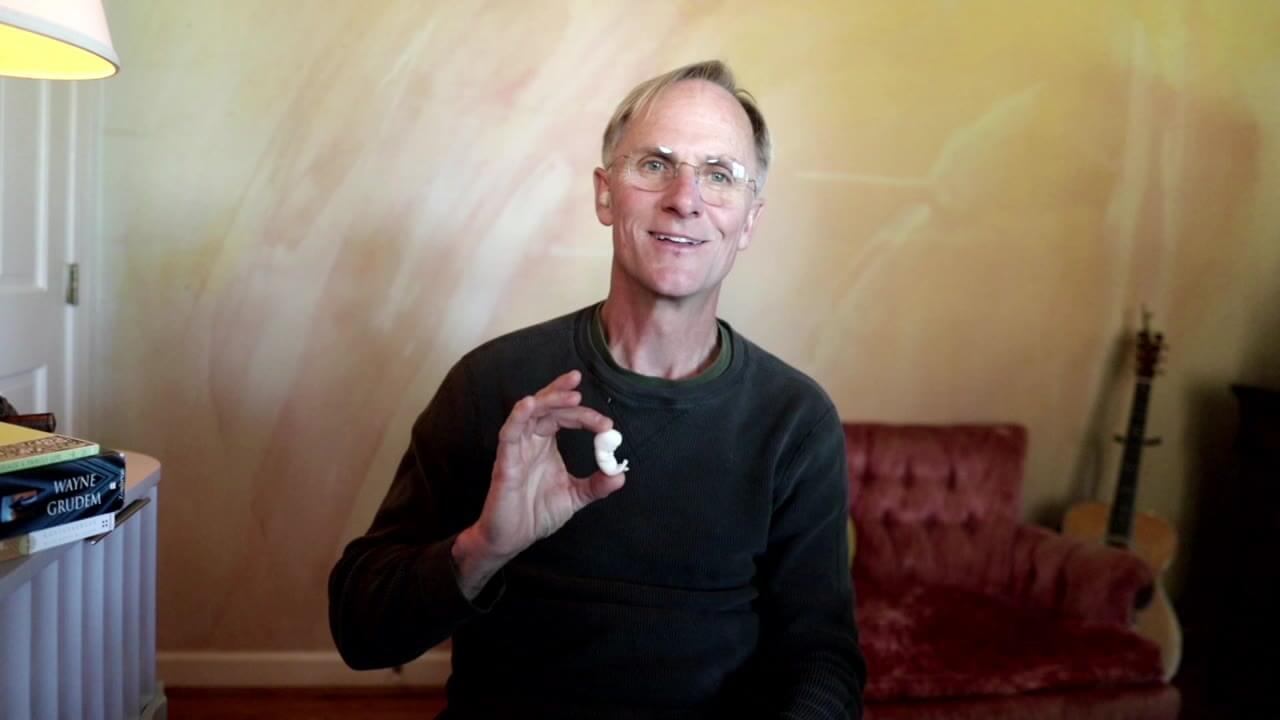
Often, when Christians want to start rescuing babies, say in Cuba, there are doctors in the local churches who want to help. We can teach them to use a handheld ultrasound to show a mother her intact uterine pregnancy.
This modern, portable handheld works with an ordinary cell phone, a small version of the large ultrasound units you see in hospitals. We have taken more than a dozen of them to Cuba, and we just sent six more to Kenya, Zambia and Uganda to be given to doctors and trained workers. They help a mother see her unborn baby and choose life.
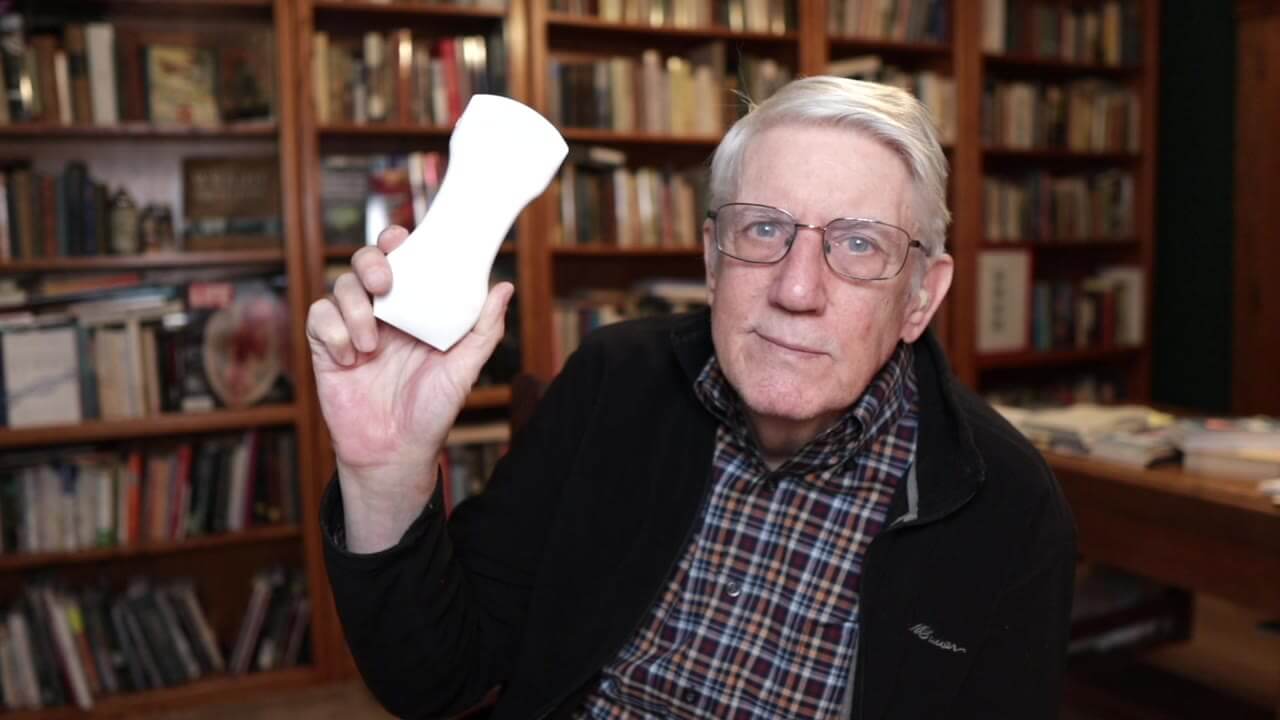
So there is the ultrasound in one hand and the Tiny Baby in the other, and both teach what the Bible teaches: human life has value, and it begins in the womb, not outside it.
It was beautiful to be at a missions conference and talk with OB-GYNs, sonographers, trained nurses and other medical professionals. Not one of them disputed that human life begins in the womb, because they were all trained in medical science. When you hear people say that it is not a human life yet in the womb, those are people who have not been medically trained.
The next generation of medical missionaries
What excited Mark most was who he talked to. Broken down, almost 80 percent of his conversations at the booth were with people under 25 or 30: medical students, first-year residents and young people beginning to think about their own future.
They were asking real questions. Will God train me as a doctor to go out and serve him on the mission field? Or will I practice here in America and go on frequent mission trips to use my skills? Many of them wanted to be connected to the mission of PassionLife.
We start with theology, ethics and the Bible, and with pastors. But the end point of our work is Christians opening pregnancy help medical clinics all over the world. There are now 22 in Cuba, several are beginning in China, and we are seeing them open in India.
So join us. Visit passionlife.org and download our booklet, The Moral Crisis of Abortion and World Missions, and you will begin to see why medical missions is an entry point for the gospel all over the world, and how you can make a difference.
This article is adapted from the episode transcript.