
Download for free
This is what the work costs.
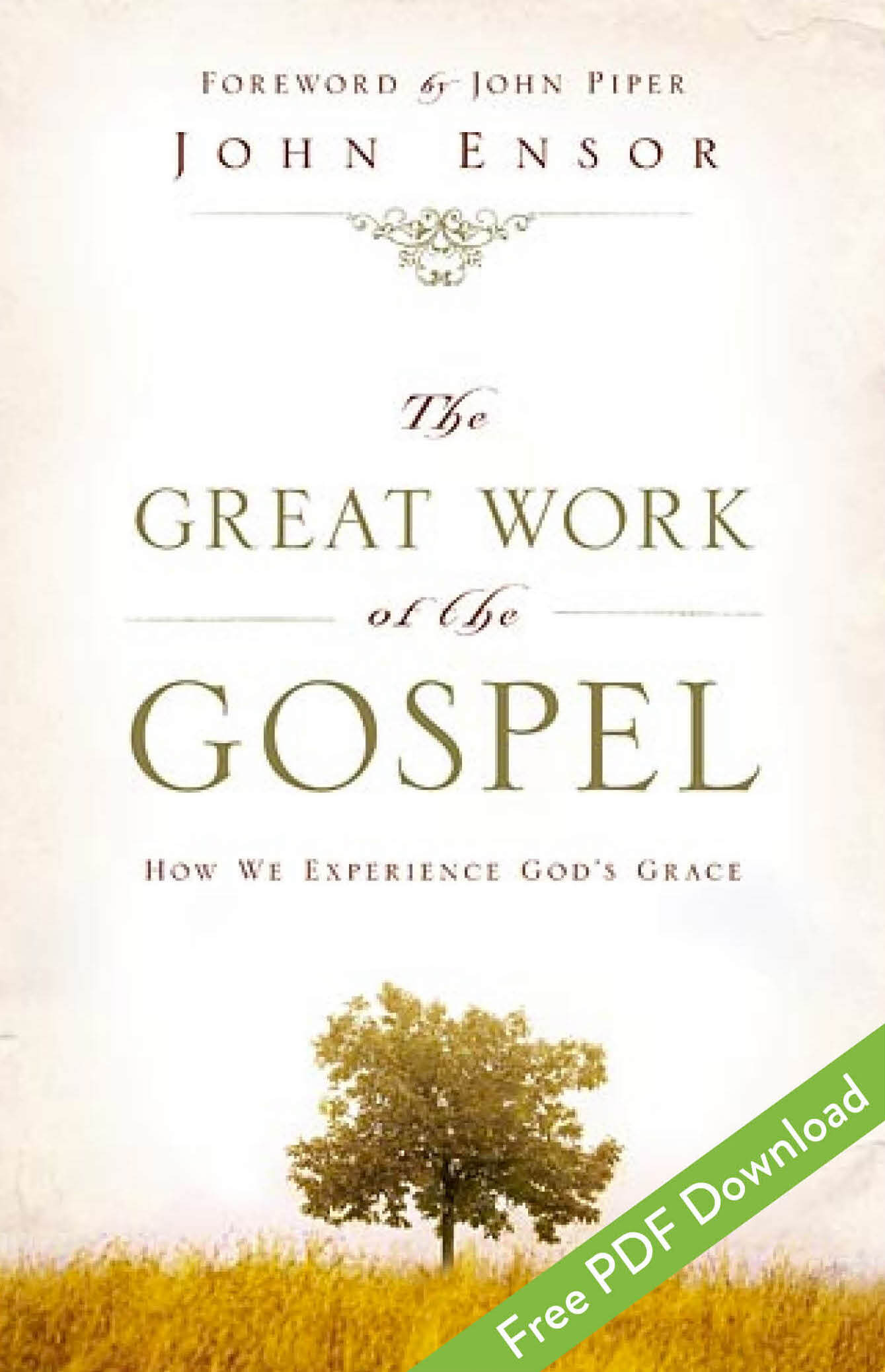
If you want to understand why anyone does it anyway, start with The Great Work of the Gospel — foreword by John Piper.
No cost, no shipping. Unsubscribe any time.
It is not every week that we get to sit down with a man who has functioned, for the better part of forty years, as the pastor of a generation.
That is not an exaggeration, and we do not use the phrase loosely. PassionLife works in more than forty countries, and we meet with pastors on nearly every continent. Inevitably — in a rented room in Asia, in a church office in Africa, over a plate of food in Latin America — John Piper’s name comes up. Something they read. Something that reordered how they think about God. Something that changed the shape of their ministry. It really is a global impact.
So when John and Noël Piper joined us in Atlanta for our fundraising dinner — John as our keynote speaker, and the two of them together for a long interview afterward — it was a special night indeed.
Fifty Years of Friendship
A word about the friendship first, because it explains the tone of the whole night.
I, John, met John Piper when I was a twenty-one-year-old student. He was a young professor teaching New Testament Greek, and he was my teacher. But as much as I liked his teaching in Greek, he had a girl in that class I liked a good deal more. Her name was Kristen. She was also studying New Testament Greek, and I was not brave enough to actually ask her on a date, so what came out of my mouth was, How would you like to study for John Piper’s Greek exam?
That was as far as my courage could take me at the time. But it grew. A year and a half later, John Piper married us.
That was 1978. Everyone had long hair. People still laugh at the photograph. And it means I have known this man, at a personal level, for right around fifty years — since before he had written a book, since before he had published anything at all.
Which is worth holding onto as you read what he told us about himself.
“That’s My Message”
Piper’s topic for the evening was risk taking for life and fruitfulness, and it was one hundred proof John Piper. Challenging, engaging, and in many ways quite stunning.
He opened by praying that God would take a few minutes and make them powerful in directing people’s lives — in ways that they did not expect when they came, and will be surprised by. Then he laid out four convictions, plainly numbered, the way he does:
- Taking a risk for the glory of Christ is biblical and right.
- God often uses risk taking to set people free from long-standing fruitlessness.
- Christians are often pushed over the line into a Christ-honoring risk simply because somebody comes along and says, you should seriously consider taking a risk.
- Many in this room — all of us, sooner or later — stand at a fork in the road, and need to take the risky path.
“Which is what I’m here to do,” he said. And later, more bluntly: “God has sent me here tonight to simply say you should seriously consider the risky way. That’s my message.”
Then, to illustrate the second conviction, he told a story about himself.
The Boy Who Took the C
From about the age of twelve until he was twenty — his entire adolescence — John Piper could not speak in front of a group.
He has written about it in Future Grace and elsewhere, but hearing him say it out loud in a ballroom is a different experience. This was not shaking knees and butterflies in the stomach. This was paralysis. His shoulders would tighten. His throat would close off. His heart would pound so hard that he could see his shirt moving. He was, in his own word, terrified at the prospect of shame, and simply could not do it.
In the eighth grade the class was going down the row, one student at a time, each one going up front to read a single paragraph about their project. As his turn came toward him, he got up, left the room, went to the bathroom, and cried.
In the tenth grade, his civics teacher announced on the first day that everyone would give an oral book report. Piper went to him after class and said he could not do a book report. The teacher said he had to. Piper said he could not. The teacher told him that the best grade he could earn in that class without one was a C.
“I said fine. And I took the C.”
I, Mark, found it disarming to stand in front of him that night and hear it. Here is a man known around the world for his preaching and his teaching and his public speaking, telling a room full of people that the very thing he became known for was, for the first two decades of his life, flatly impossible. It makes me wonder what he would have said back in grade school if you had told him he would end up one of the most famous speakers and teachers of his generation, if not alongside the greats of all time.
And I, John, had several biblical ideas crowd in at once. A seed has to fall into the ground and die before it becomes fruitful. Moses at the burning bush: send somebody else, I am not equipped for this. Grace perfected in weakness, so that our greatest weakness becomes the very thing God uses to do something great. Among all the paradoxes of the Christian life, here is one standing in front of us in a suit: the speaker for a generation was a man who was deathly afraid of speaking.
Which naturally leaves the question — how on earth did that change?
Thirty Seconds in Chapel
The year was 1966. Piper was twenty years old, at Wheaton College, between his sophomore and junior year. There was a speech class required the following year, and he was seriously planning to drop out and transfer somewhere that did not require it.
Then a chaplain named Evan Welch came up to him and asked, Johnny, would you pray in chapel? Summer school. And inexplicably — his word, and he insists on it — Piper asked how long you have to pray.
Thirty seconds, a minute?
“To this day I cannot account for why I said yes. I just cannot.”
The chaplain walked off, and Piper walked back and forth on front campus pleading with the Lord, and then he made a vow. He has only made two or three vows in his whole life; he considers them dangerous, because you will vow to the Lord and mess up, and God does not like broken vows. But he made this one:
“Lord, if you’ll just get me through thirty seconds of prayer in front of five hundred students, I will never again say no to a speaking opportunity out of fear.”
God got him through. Something broke in the summer of 1966 — the most pivotal year of his life, he says. And by his own account he has kept that vow to this very day.
He wanted us to feel the size of it. “To me, that was — I would rather go to war than speak in front of five hundred people. To say yes to that was an inexplicable risk. I took it, God met me.”
Then he turned it on the room:
“Every person in this room is facing or will face a fork in the road. And you will have to decide: do I take the easy, safe, risk-free way, or the hard and the risky way?”
And he pushed it one step further, which we did not see coming. Where do you think PassionLife came from? Where does any fruitful ministry come from? Before there was a president of a global pro-life ministry, there was a pastor in Boston who invited Piper to a conference in 1987 called Fueling the Burning Heart — two pastors, almost forty years ago, dreaming about the relationship between local ministry and global impact, about saving eternally and saving in the womb.
Nobody in that conversation could have drawn a line from there to here. That is precisely his point. God works in inscrutable ways — ways you will not be able to explain or predict.
Why This Message Is More Radical Now Than It Was Fifty Years Ago
Here is what struck us most in the days after.
I, John, was with my daughter a couple of days ago, and she told me she had taken her three little ones — two of them three years old, one a year and a half — to a playground where staff were on hand to tell the children not to run. They might get hurt. They were permitted to walk from one thing to the next.
I grew up with monkey bars. Big ones. You could climb them, you could swing from them, and you could absolutely fall off of them.
I, Mark, have a tremendous scar on my eyebrow from doing exactly that, and the truth is it has been a great blessing to me. It has kept me very humble, and it settled forever the question of which of us is better looking. So yes — let your kids fall off the monkey bars every once in a while.
But the serious point is the one my daughter was making: we live in a completely risk-free culture. Do not let the child get hurt in any way. And children raised that way grow up weak and fragile. Which means Piper’s message lands as far more radical today than it would have landed fifty years ago, when parents wanted their kids to scrape their knees and bump themselves and get ready for life. Go play on the farm equipment. That kind of thing.
Our culture tilts every one of us away from risk taking. Biblically, we need to be tilted in the other direction. That is a good antidote for the times in which we live.
It is not a call to recklessness, and it is worth being careful here. There is a real difference between acting in faith and acting with wanton disregard for what God wants.
I, John, have stood at that crossroads in three distinct seasons of my life. The first was leaving traditional pastoral ministry to start a pregnancy help clinic back in Boston. It was painful and excruciating. We had no income, I had three children, and I was finding groceries left on my front porch. I remember asking whether this was going to destroy my marriage — and concluding that it was not, because Kristen and I had sat down and settled the actual questions: Do we believe God is in this? Is it God-glorifying? Is it consistent with Scripture? And then this: if things go wrong, that is part of God’s good plan for us, and we are not going to be divided by it. Years later, before going into Asia, we sat down and had the same conversation. A lot of bad things could happen. We resolve together before the Lord that this is his will for our life, we take the risk, and then let happen what happens. So far, a lot has happened.
Whatever bad things come to you because you took the risk are, in the providence of God, good for you. They do not mean you made the wrong decision.
I, Mark, announced to family and friends years ago that we felt called to the mission field, and we met with quite a bit of resistance to the idea. Then, having gone all the way around the world, we landed in the big city where most of the missionaries were — and when we decided to move out of that city into a remote, rural location, we got even more pushback, this time from the missionary community itself. You’ve come far enough. You don’t have to go all the way out there. It isn’t good for your kids. But the risk taking is what defined the success God set up for us. Everything he accomplished, he accomplished by pushing us out of our own comfort zone in order to follow him.
And the fruit of that Atlanta evening is already showing up. One family wrote to tell us they had been sitting on the fence about whether to go into foster care. Then a man stood at a podium and said, when you get to that crossroads, give serious consideration to going ahead and taking the risk.
A Word to You
If you are watching this at a crossroads of your own, hear the thing Piper actually came to say. He was not offering a technique. He was making an observation about how God works: the risk is very often the doorway out of long-standing fruitlessness, and the thing you are most afraid of may be the exact thing God intends to use most in your life.
The old missionary maxim still stands — attempt great things for God, expect great things from God. And the ground underneath the attempt is that God has made it impossible for us to ultimately fail in a risk taken for his glory.
Two things you can do right now.
Go to passionlife.org and watch the entire keynote. What we have covered here is one section of a much longer address, and the rest of it is well worth your time — including the part, which we will come back to in a future episode, where John Piper and John Ensor were both arrested together as part of Operation Rescue.
Then watch the interview. Both of the Pipers sat down with us, and Noël was extraordinarily vulnerable and open. People clamor for John, and she tends to stand in the background, but she has a great deal to say, and she has seen and experienced a great deal. It cannot be easy being married to someone that well known all over the world. God called her to her part in it, and she has done it faithfully.
Risk taking is part of what animates this ministry and the partners who serve alongside us. One of our partners in India traveled out to teach and arrived to find an angry mob waiting for him. Sometimes risk taking ends up in uncomfortable places. There are hard things in this world that need to be done.
But as John Piper urged us that night in Atlanta: consider the risky way. In the sovereignty and providence of God, he is certainly able — and may well intend — to do extraordinary and unspeakable things in your life as you trust him in it.
This article is adapted from the episode transcript.